The Technical Relationship Between HACCP and TACCP in Modern Food Safety Systems
Modern food safety systems are no longer focused only on accidental contamination. Food businesses must also protect products, facilities, and supply chains from intentional threats designed to cause harm, disruption, or public fear. HACCP (Hazard Analysis and Critical Control Points) and TACCP (Threat Assessment and Critical Control Points) work together to strengthen food protection within GFSI-recognized standards such as FSSC 22000, BRCGS, SQF, and ISO 22000.
Watch ACS HACCP Certification Video
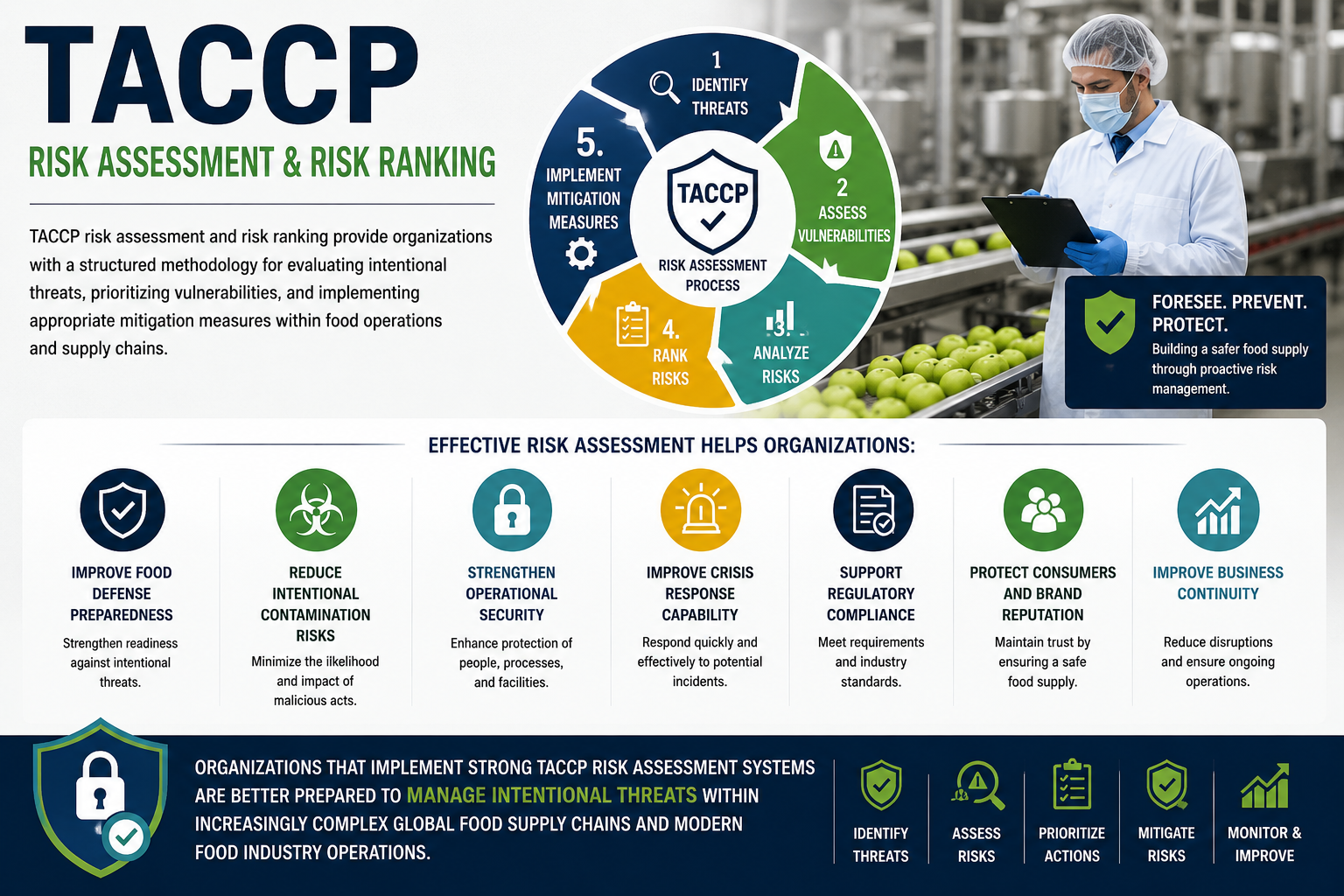
HACCP is a preventive food safety system designed to identify and control biological, chemical, and physical hazards that may occur unintentionally during food production. TACCP, however, focuses on intentional threats such as sabotage, malicious contamination, terrorism, insider threats, tampering, cyberattacks, and unauthorized access to facilities or systems.
TACCP helps organizations identify vulnerable operational areas, evaluate intentional threats, and implement mitigation measures that reduce risks to food safety, operational continuity, and consumer protection. Common TACCP controls include restricted access systems, surveillance monitoring, visitor management, cybersecurity protection, employee awareness programs, and crisis management planning.
Within modern food industries in Canada and the United States, HACCP and TACCP are increasingly integrated as part of comprehensive food defense and operational security systems. HACCP manages accidental food safety hazards, while TACCP protects organizations against deliberate attacks and intentional contamination risks.
TACCP implementation supports organizations by improving facility security, strengthening supply chain protection, enhancing crisis preparedness, protecting critical infrastructure, and supporting compliance with GFSI-recognized certification schemes and food defense regulations.
Cybersecurity and Food Defense
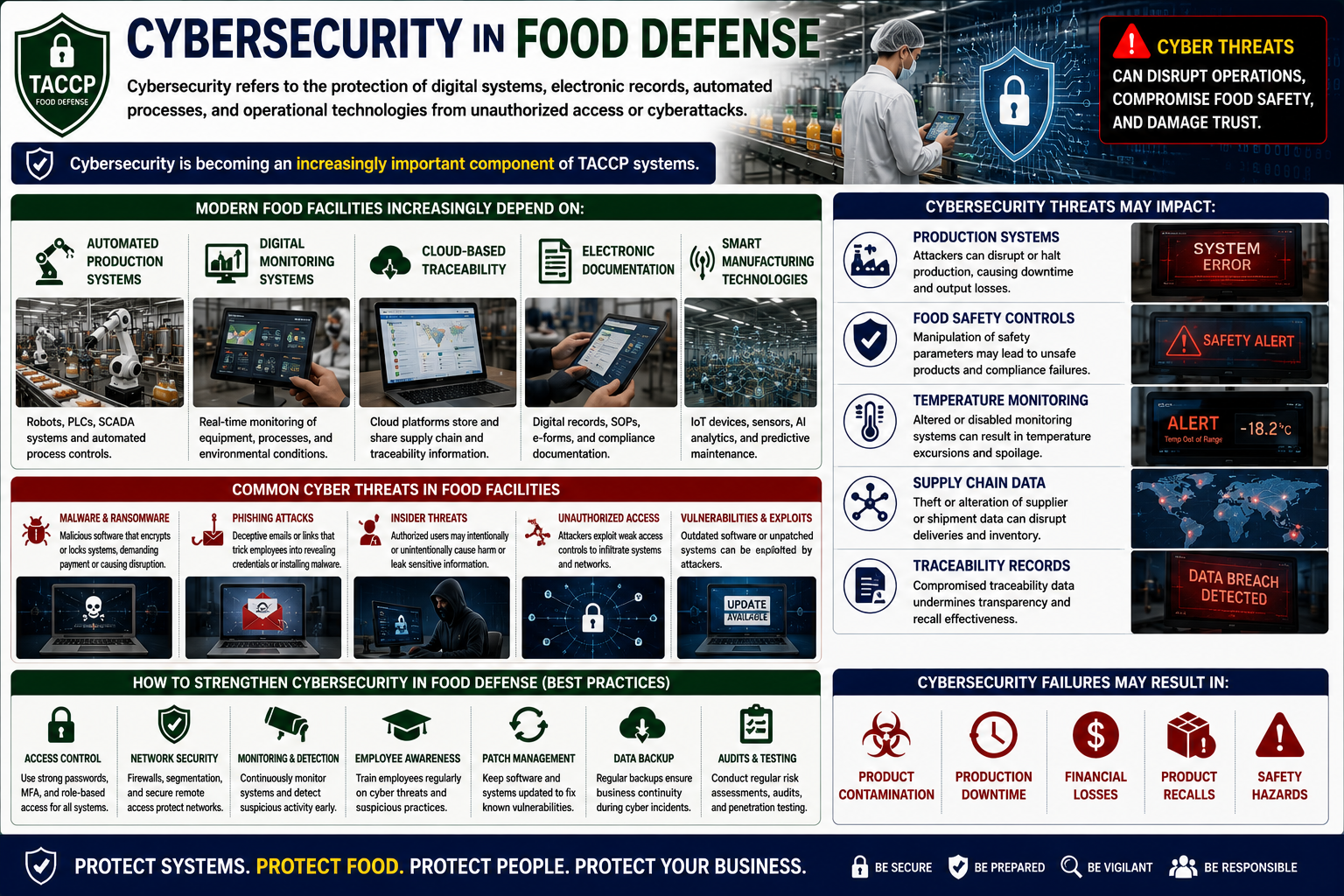
As food facilities increasingly depend on automation, digital monitoring systems, cloud-based traceability, and smart manufacturing technologies, cybersecurity has become an important component of TACCP systems. Cyberattacks may affect production systems, traceability records, temperature controls, and operational continuity. Modern food defense programs therefore integrate cybersecurity controls alongside physical security measures.
Crisis Management and Business Continuity
Effective TACCP systems support crisis management and business continuity planning by helping organizations respond rapidly to intentional contamination incidents, operational disruptions, and security threats. Strong TACCP programs improve emergency preparedness, recall management, communication procedures, and recovery planning during food defense incidents.
Ultimately, HACCP and TACCP should be viewed as complementary systems within a modern food safety management framework. HACCP protects against accidental hazards, while TACCP protects against intentional threats. Together, they strengthen food safety, operational resilience, regulatory compliance, and consumer confidence.