ISO 14001:2026-What Has Changed and What It Means for Your Organization
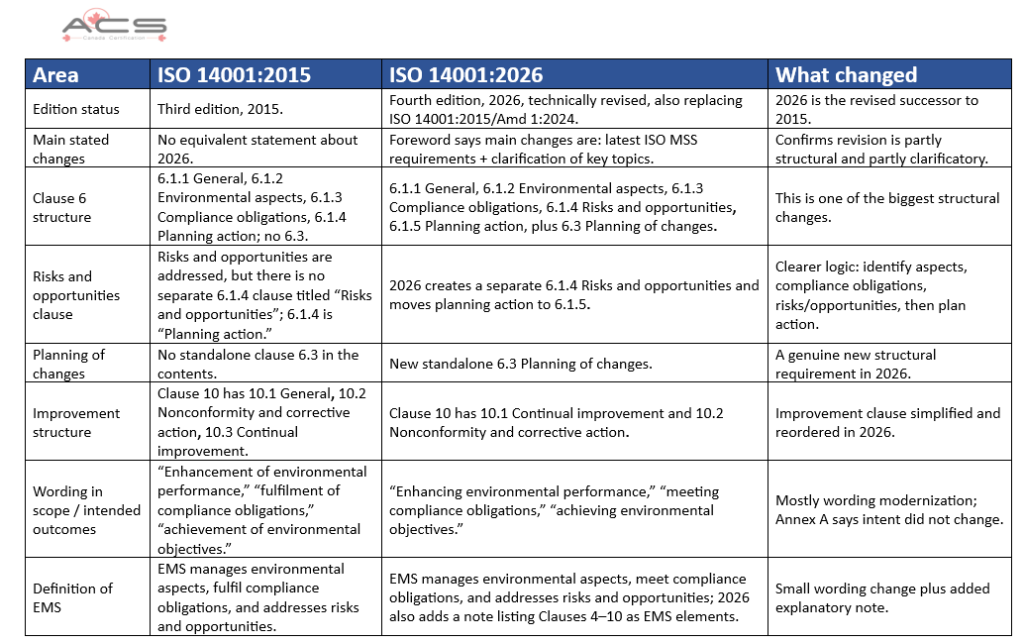
The publication of ISO 14001:2026 marks the fourth edition of the Environmental Management Systems (EMS) standard, replacing ISO 14001:2015. This revision introduces a series of technical updates, structural refinements, and clarifications aimed at aligning the standard with current environmental challenges and the latest ISO management system framework. According to the standard itself, the 2026 edition has been technically revised, incorporating updated ISO requirements for management system standards and providing greater clarity on key topics. Key Changes in ISO 14001:2026
1. Enhanced Focus on Environmental Conditions
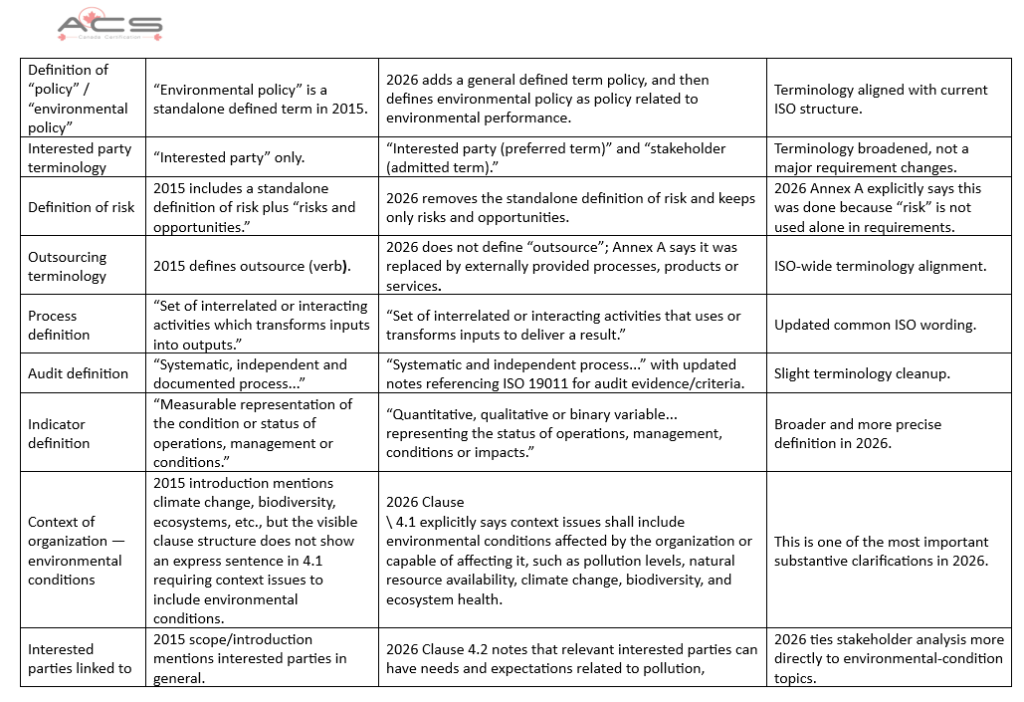
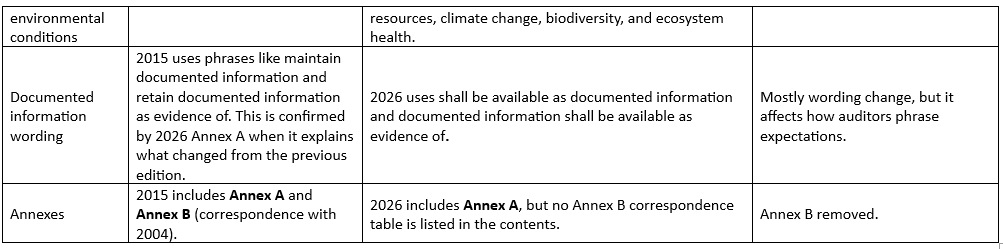
One of the most significant updates is the explicit requirement to consider environmental conditions within the organization’s context. Organizations are now required to evaluate factors such as:
- Climate change
- Biodiversity
- Ecosystem health
- Availability of natural resources
- Pollution levels
This strengthens the link between environmental management systems and global sustainability priorities, ensuring organizations take a broader and more strategic view of environmental risks and impacts.
2. Restructuring of Clause 6 (Planning)
Clause 6 has been reorganized to improve clarity and logical flow:
- 6.1.2 Environmental aspects
- 6.1.3 Compliance obligations
- 6.1.4 Risks and opportunities (new explicit clause)
- 6.1.5 Planning actions (renumbered and clarified)
- 6.3 Planning of changes (new clause)
This revised structure provides a clearer framework for identifying, evaluating, and addressing environmental risks and opportunities.
3. Introduction of “Planning of Changes” (Clause 6.3)
A new clause requires organizations to ensure that changes affecting the EMS are planned and managed systematically. This reinforces the need for:
- Controlled implementation of changes
- Consideration of risks and impacts before changes occur
- Alignment with intended EMS outcomes
4. Updated Terminology and Harmonization
ISO 14001:2026 adopts updated terminology aligned with the latest ISO harmonized structure, including:
- “Meet compliance obligations” replacing “fulfil compliance obligations”
- Updated phrasing for documented information (e.g., “shall be available as documented information”)
- Replacement of “outsourcing” with “externally provided processes, products or services”
- Removal of the standalone definition of “risk” in favor of “risks and opportunities”
These changes improve consistency across ISO standards without altering the core intent.
5. Simplification of Improvement Clause (Clause 10)
Clause 10 has been streamlined:
- 10.1 Continual improvement
- 10.2 Nonconformity and corrective action
This simplifies the structure while maintaining the emphasis on continual improvement.
6. Strengthened Link to Strategic Direction
The revised standard reinforces integration of the EMS into the organization’s strategic direction and business processes, ensuring environmental management is not treated as a standalone system but as a core part of organizational governance.
What This Means for Certified Organizations
Organizations currently certified to ISO 14001:2015 should note:
- The overall framework remains familiar, minimizing transition complexity
- Key updates are evolutionary rather than revolutionary
- Updates will primarily impact:
- Context analysis (Clause 4)
- Planning processes (Clause 6)
- Documentation language and structure
- Management of organizational changes