HACCP & VACCP in Modern Food Safety Systems
The Technical Relationship Between HACCP and VACCP in Modern Food Safety Systems
In today’s global food industry, food safety management systems are no longer limited to controlling accidental contamination alone. Modern food businesses must also address intentional acts that may compromise product integrity, authenticity, and consumer trust. Two major systems that support this objective are HACCP (Hazard Analysis and Critical Control Points) and VACCP (Vulnerability Assessment and Critical Control Points). While these systems are closely related, they focus on different types of risks and together form an integrated approach to food protection within GFSI-recognized standards such as FSSC 22000, BRCGS, SQF, and ISO 22000.
Watch ACS HACCP Certification Video
HACCP is a preventive food safety system developed to identify, evaluate, and control biological, chemical, and physical hazards that may occur unintentionally during food production and handling. HACCP is science-based and process-oriented, focusing primarily on hazards that can directly affect consumer health.
VACCP, on the other hand, was developed to address food fraud vulnerabilities and economically motivated adulteration. Unlike HACCP, VACCP focuses on intentional acts rather than accidental hazards. The objective of VACCP is to identify areas within the supply chain where fraud could occur for financial gain and to establish mitigation measures that protect product authenticity and integrity.
Typical examples include ingredient substitution, dilution, mislabeling, counterfeit products, falsified certificates, or adulteration using lower-cost materials. VACCP became increasingly important following major global food fraud incidents such as the horse meat scandal in Europe and melamine adulteration in milk products.
From a technical perspective, HACCP and VACCP complement each other but operate with different risk drivers. HACCP evaluates hazards based on scientific evidence related to food safety, while VACCP evaluates vulnerabilities based on opportunities for fraud, economic pressure, supply chain complexity, detectability, and historical fraud patterns. HACCP asks the question: “What accidental hazards could harm consumers?” VACCP asks: “Where could intentional fraud occur within the supply chain?”
Another important technical distinction is the type of hazard addressed. HACCP primarily deals with unintentional contamination arising from process deviations, equipment failure, human error, or inadequate hygiene practices. VACCP addresses intentional acts designed to deceive customers or increase profit. However, the consequences of food fraud can still create food safety hazards if adulterants are unsafe or undeclared allergens are introduced. Therefore, VACCP not only protects brand integrity but also contributes directly to consumer protection.
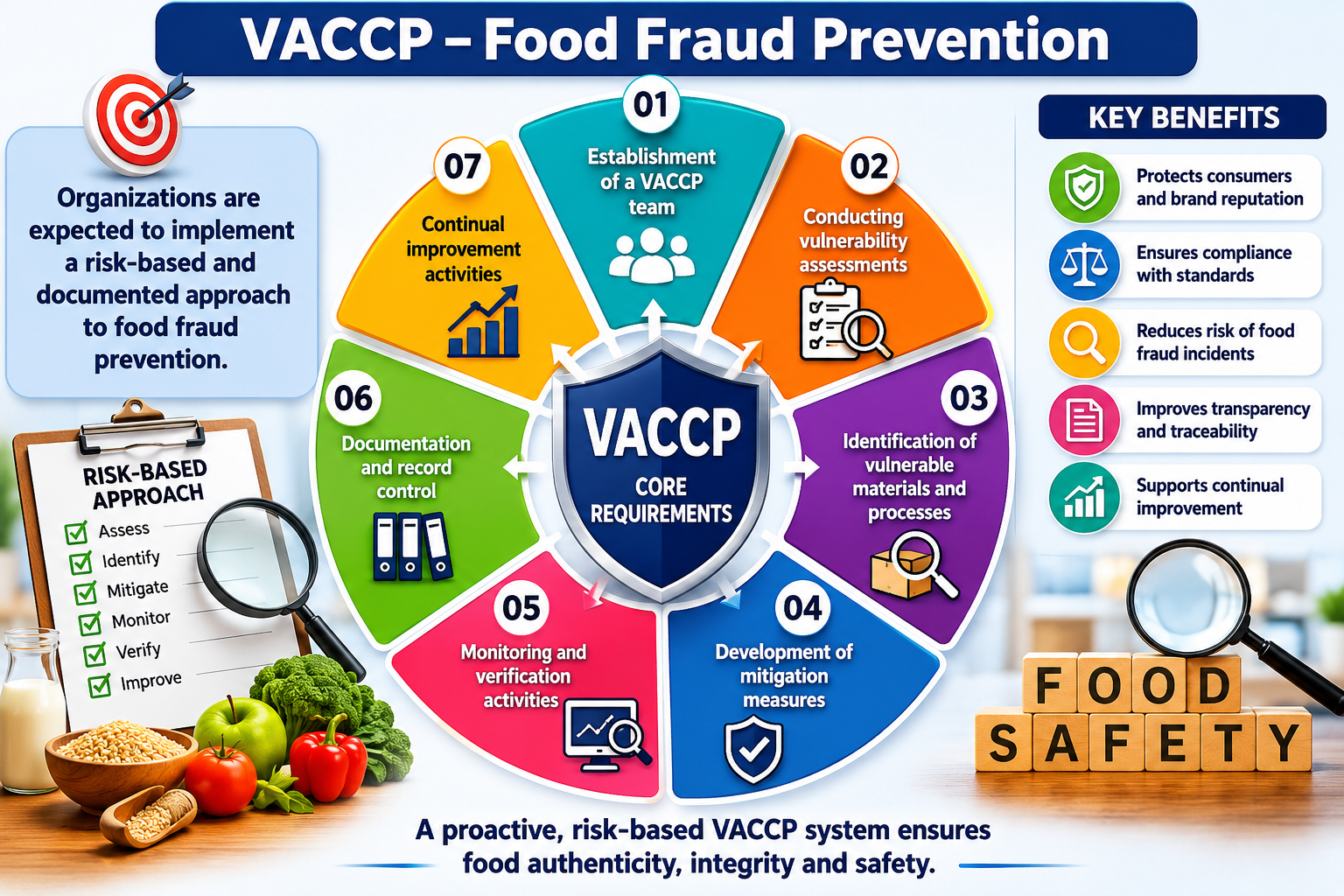
In GFSI-recognized food safety systems used widely in the United States and Canada, HACCP and VACCP are expected to work together as part of an integrated food safety culture. HACCP provides operational process control, while VACCP strengthens supply chain security and product authenticity assurance. Organizations are required to conduct vulnerability assessments, identify high-risk ingredients and suppliers, implement mitigation measures, and maintain traceability and supplier approval programs. These requirements are now standard expectations during third-party certification audits.
For food companies operating in North America, integrating HACCP and VACCP provides a more comprehensive food protection strategy aligned with regulatory expectations, customer requirements, and international certification standards. As supply chains become increasingly global and complex, organizations must move beyond traditional food safety approaches and adopt systems that address both accidental and intentional threats.
Crisis Management and Business Continuity Planning
Another important technical connection between HACCP and VACCP is their contribution to crisis management and business continuity planning within modern food safety systems. HACCP systems are designed to manage operational food safety incidents such as contamination, process failures, allergen cross-contact, or product recalls, while VACCP focuses on intentional food fraud incidents that may threaten product authenticity, consumer trust, and brand reputation. In GFSI-recognized systems across the United States and Canada, organizations are expected to establish documented crisis management procedures capable of responding rapidly to both accidental and intentional food safety events.
Effective crisis management includes product traceability, recall coordination, communication protocols, supplier notification systems, corrective actions, and business recovery strategies. Integrating HACCP and VACCP into crisis planning strengthens organizational resilience by ensuring companies can maintain food safety, regulatory compliance, and operational continuity during emergencies, supply chain disruptions, or fraud-related incidents.
Digital Traceability and Blockchain Verification
The integration of digital traceability systems and blockchain verification technologies has become increasingly important in strengthening both HACCP and VACCP programs within advanced food safety management systems. Traditional HACCP systems rely heavily on accurate monitoring records, batch traceability, and documented verification activities to ensure process control and regulatory compliance. VACCP systems further require transparent supply chain visibility to identify vulnerabilities associated with food fraud, ingredient substitution, counterfeit documentation, and unauthorized sourcing.
Digital traceability platforms improve the accuracy, speed, and reliability of tracking materials throughout the supply chain, while blockchain technology provides secure, tamper-resistant records that enhance transparency and authenticity verification.
In North American food industries, these technologies support rapid recall management, supplier verification, authenticity validation, and real-time monitoring of supply chain activities. As food supply chains become more global and complex, digital traceability and blockchain verification are increasingly viewed as essential tools for protecting food safety, product integrity, and consumer confidence under GFSI-recognized certification systems.
Ultimately, HACCP and VACCP should not be viewed as separate systems, but rather as complementary pillars within a modern food safety management framework. HACCP protects food safety through hazard prevention, while VACCP protects food integrity through fraud prevention. Together, they support consumer confidence, regulatory compliance, supply chain resilience, and sustainable food business operations.